
30 November 21
Reality Tunnels
Written by d0ublezer0, inventor of the fatum project and the creator of the noveltism philosophy behind Randonautica
Have you ever thought that the world that other people see may be different from yours? Or why, for example, you haven’t seen your former classmates for years, despite the fact that they might live next door? Or why people who have similar qualities are more likely to end up in the same places, or come up with the same ideas, at the same time? Let’s try to find the answer to these questions in this article.
The human brain is designed in such a way as to perfectly adapt decision-making algorithms to the tasks that we face most often. This allows us to save energy by not being distracted by what isn’t important. We remember which solutions helped us to achieve success and begin to apply them in all similar situations, forming a kind of pattern. The more often this pattern is used, the stronger it becomes, and the more situations the brain begins to conform with these solutions, ignoring small details and differences (i.e., “when all you have is a hammer, every problem begins to look like a nail”). This applies to both the choice of routes and visits to certain locations, what things we pay attention to, and which we do not notice at all, and at what time we go out, how we react to different situations, and what meaning we give to our observations; what we consider useful, and what we try to avoid. Many patterns define conscious engagement with reality such as beliefs, methodologies, skills, and principles, and many are applied reflexively when we do something “automatically” — because we are used to it.
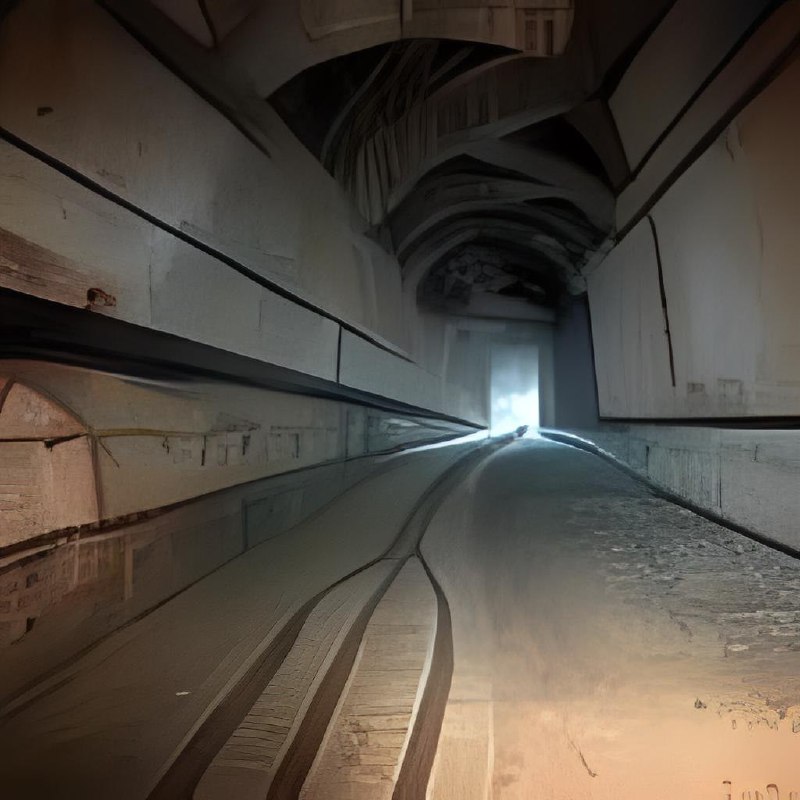
All these patterns, when put together, form our unique reality tunnel - a limited frame of perception of the environment through which we see the world around us and within which we interact with it. The analogy is simple enough: when we are in a tunnel, our vision is limited by its construction. It creates something like a personal matrix, but unlike a simulation, this matrix is a part of the real world: the only illusion here is the belief that we see the whole world, and not just a part of it.
The structure of the reality-tunnel is able not only to determine what we see around us, where we are more often, and what details of the environment we pay attention to, but also what we do in these places and, as a result, what happens to us there. For example, if your friend is incredibly lucky and often finds money on the road, then it is logical to assume that this is happening because he walks along the same road and at the same time as a person who regularly loses that money. Perhaps they both go to some expensive place, where at about the same time many people go with a large amount of money, which they do not properly look for.
Thus, your lucky friend benefits from the fact that his reality tunnel intersects with a stranger’s reality tunnel on the basis of a common proximity to an expensive place, and corresponding artifacts come to him from the alien reality tunnel.
So we come to the main idea that if you learn to get to the intersections of the reality tunnels, you can get attributes that facilitate the transition to a new tunnel, and having learned to freely travel through the intricacies of this methodological network, you can generally become anyone, with any kind of possibilities.
The most obvious way to create such intersections is, of course, to adopt the qualities and interests of people who have what you want to have. Since the reality tunnel is determined by your qualities and behavior, their change will create new events and artifacts in your environment, and these, in turn, will change your personality even more. If you stay in someone else’s reality tunnel for a long time, you yourself begin to adopt its qualities, as a person living in a foreign country is able to very quickly master its language and culture.
However, the changes are not limited to new interests and opportunities. Any element of novelty that has entered your reality tunnel from the outside can completely change your very vision of the surrounding reality. A very striking example is the Baader-Meinhof effect, when, for example, you learn a new word and this word starts to pop up everywhere, all your friends begin to use it, it appears in all the books you read, on the walls, in the media, etc. … The same thing can happen with objects, images and in general, anything. In fact, they were always around you, but your brain was not used to noticing them, they were invisible to you until you learned to pay attention to them. Thus, new knowledge can literally make you see the world differently.
Just imagine how different the worlds in different reality tunnels can be and what a rich “multiverse” they form. However, the difficulty of acquiring new knowledge, as a rule, lies in the fact that we are simply not looking for it. Instead, we are looking for knowledge that is a continuation of pre-existing assumptions, that strengthens and confirms already existing patterns. Search engine algorithms sometimes make it even worse by showing us only what we were already interested in before, and creating the so-called “Filter Bubbles”.
Here we come to the concept of the Stasis Field.
The Stasis Field is the inertia of patterns, the causal flow that must be overcome in order to break the network of their causal relationships. The stasis field does not allow you to easily leave your reality tunnel and change dramatically, blossoming into a new person, and in fact makes sure that nothing happens in the reality tunnel that would be uncharacteristic of it. For you, this can manifest itself both in the strength of habits, fear of change, and simply in different obligations to the elements of the old reality tunnel, as well as your incompatibility with the new one. All artifacts of novelty that have got into your reality tunnel from the outside, the Stasis Field will try to reject and turn into useless junk, so you will need to hold on to these artifacts strongly and use them as much as possible, so they can take root in your reality tunnel and transform it. Not to mention, this requires advanced neuroplasticity, or the ability for the brain to create new neural pathways that allow you to think differently. However, even obtaining such artifacts can be difficult.
In order to get into someone else’s reality tunnel, one must be somewhat similar to those who are already in it, as if the desired tunnel does not intersect with ours, we will not only be unable to adopt the habits of its inhabitants due to the lack of the necessary qualities and attributes, but most likely, we don’t even know which habits they actually have in the first place, because we don’t see such people in our personal world. The fact is that your reality tunnel is mostly populated only by people who are somewhat similar to you.
There is a theory called Six Degrees of Separation (the rule of six handshakes), according to which any two people on Earth are separated by no more than five levels of common acquaintances (and, accordingly, six levels of connections).
In modern social networks on the Internet, this number is on average even less, but try to find people who are separated from you by two levels or more. You will find that such people will be much less like you than those around you. You will not meet these people at a party with friends, because they do not have mutual friends with you, they live in a completely different reality that does not intersect with yours. Even if they somehow live next door to you and walk the same road, you will not meet them, because you walk on this road at different times. Therefore, you rarely find yourself in the same places with celebrities, for example, unless, of course, you yourself are one of them, and if you do, it happens rarely and for a short time.
Fortunately, there is a way to dig rabbit holes even to the reality tunnels that are far from you, although for this you will have to get out of patterns and the Stasis Field’s influence as much as possible. And this way, of course, is randomization. Any pattern determines the space of probable outcomes that we can get by making decisions. However, the randomizer makes all decisions with equal probability and doesn’t follow any logical pattern. Therefore, if you, for example, generate a random coordinate on the map at a random time and visit it, then at this moment you will be outside the logic of your patterns, which means you can meet a person from another reality tunnel, or find some new thing, which under normal circumstances you would never find. These artifacts of novelty can become your keys to a new reality tunnel in the future. However, it will be difficult to understand which tunnel you are in, and we will talk about this in future articles.